

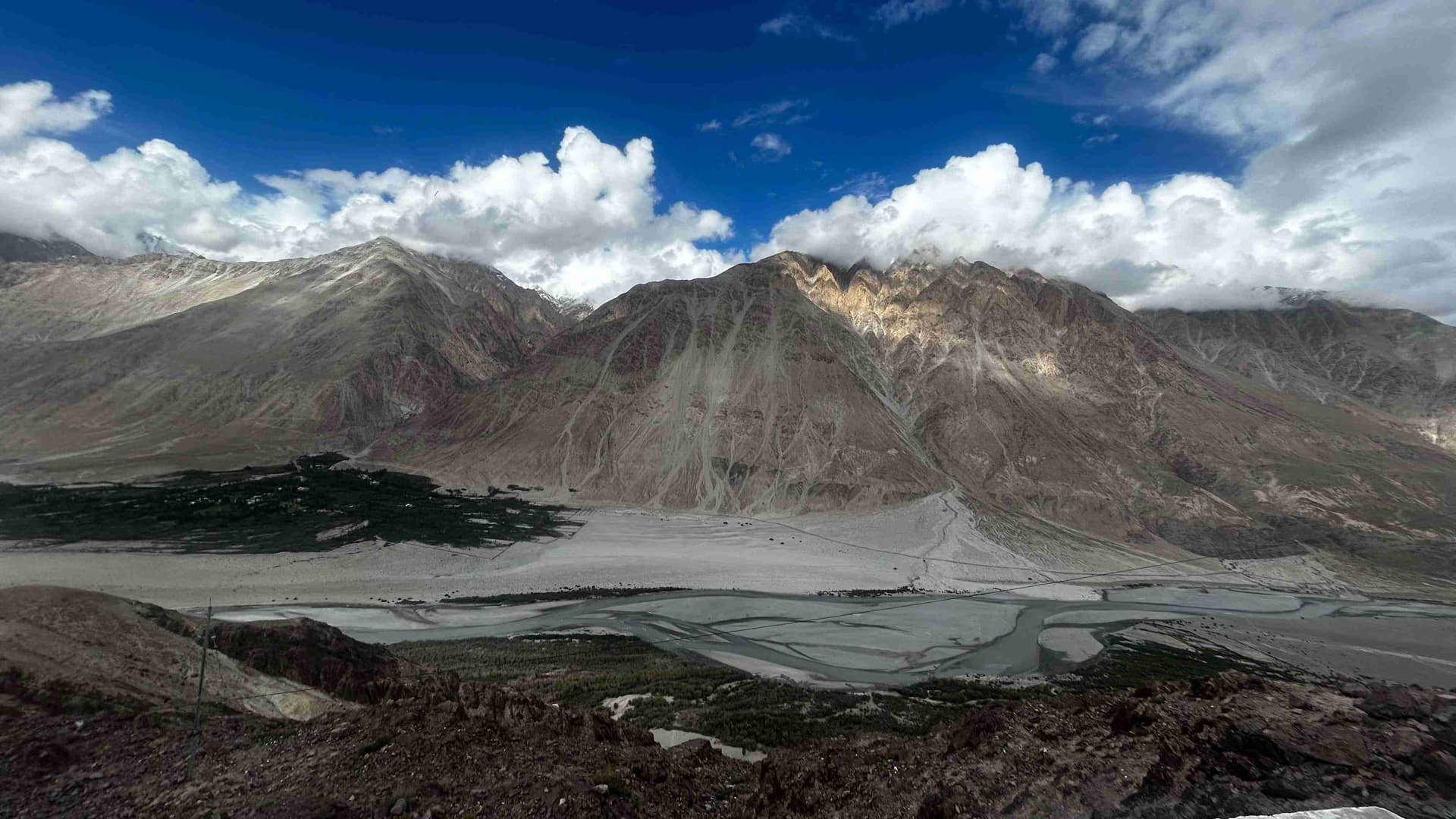
Leh Ladakh Altitude Guide: Leh, Nubra, Pangong, Hanle & Umling La
Ladakh is not just a destination of dramatic mountains and empty roads; it is a high-altitude region where elevation can vary greatly in just one day. Altitude awareness is a must before planning a road trip from Leh, Ladakh, at around 11,500 ft to the extraordinary height of 19,024 ft at Umling La.
This Leh Ladakh altitude guide will tell you the elevations of Leh, Nubra Valley, Pangong Tso, Hanle, and Umling La, and give you practical tips for acclimatisation for travellers and bikers.
Leh Ladakh Altitude Quick View
So, here’s a quick comparison of the major destinations covered in this guide:
| Destination | Approximate Altitude |
|---|---|
| Leh | 11,500–11,600 ft (3,500–3,524 m) |
| Nubra Valley | 10,000 ft (3,048 m) approx. |
| Pangong Tso | About 14,270 ft (4,350 m) |
| Hanle | Approx. 14,800 ft (4,500 m) |
| Umling La | 19,024 ft (5,798 m) |
The figures do vary a little depending on the exact village or point measured. According to official Ladakh sources, Leh is about 3,500–3,524 meters, Nubra is an average height of around 10,000 ft, and Pangong Tso is about 4,350 meters.
Major Destinations Breakdown
1. Leh Altitude – Your First Acclimatisation Halt
Leh is already very high, at around 11,500 feet, higher than most Indian cities. Hence, arriving at Leh should not be considered the beginning of an exhausting sightseeing schedule.
Most travellers should take it easy for the first 24 to 48 hours. Walk short distances, eat light, drink plenty of fluids and let your body adjust to the thinner air. Ladakh Tourism suggests tourists coming to Leh to get acclimated for at least 48 hours before travelling to higher altitude areas.
An ideal itinerary should therefore leave the first day mainly for rest and the second day for easy local exploration.
2. Nubra Valley Altitude – Not as High as Leh, But Don't Be Fooled
One interesting fact about the Nubra Valley altitude is that the valley floor is lower than Leh. The Nubra Valley floor is around 10,000 ft. After getting used to Leh, Nubra often seems relatively comfortable.
But to get there, you usually have to cross Khardung La, said to be about 18,379 ft high, according to the Leh district administration.
So while Hunder, Diskit and nearby villages are lower, the journey itself involves a major altitude gain. This is especially true for those planning Leh Ladakh bike tour packages, as riding at high passes can be physically demanding even if the valley destination looks easier.
3. Altitude Of Pangong Tso – More Challenging Acclimatisation
Pangong Tso is much higher than Leh and well above Nubra Valley at about 14,350 ft. The official Ladakh Tourism website lists the lake at around 4,350 meters (14,270 ft).
The mistake most people make is to think of Pangong as just another sightseeing stop. It is a high-altitude lake, and to spend a night here can be an experience very different from staying in Leh.
A sensible itinerary for Ladakh would be to reach Pangong only after sufficient acclimatisation. When you arrive, try to minimise physical activity, keep warm and listen to your body.
4. Hanle Altitude – Remote, High and Very Quiet
Hanle is at an altitude of about 14,800 ft in the high Changthang region of eastern Ladakh. It is particularly famous for its very clear skies and astronomical observatories and is home to India’s first Dark Sky Reserve.
Hanle is different from the more popular destinations in Ladakh. The roads are remote, facilities are limited and medical infrastructure is much more sparse than in Leh. Ladakh Tourism specifically states that medical facilities are limited in remote areas such as Hanle and Changthang.
If travellers are opting for Leh Ladakh group tour packages, Hanle should ideally be included only if the itinerary allows sufficient time for acclimatisation and does not rush the journey.
5. Umling La Altitude: Highest Point on This Route
Umling La is the altitude heavyweight of this entire trip. It is officially recorded by Ladakh Tourism as the world's highest motorable pass at 19,024 ft (5,798 m).
At this elevation, even simple actions like walking a few steps can feel surprisingly strenuous. The goal should not be to kill time at the top. Arrive safely at the pass, enjoy the scenery, take pictures and descend as planned.
This is one reason why an Umling La Ladakh tour should never be treated as a casual add-on to a normal sightseeing plan.
Altitude Comparison: What Is the Tallest Place?
For a quick reference:
- Lowest: Nubra Valley – 10,000 ft.
- Starting Point: Leh - approx. 11,500 ft
- Higher altitude lake: Pangong Tso- approx. 14,270 ft approx.
- Hanle – approx. 14,800 ft – Remote high-altitude village
- Highest: Umling La, 19,024 ft
The conclusion is that altitude is more important than distance. Even if a destination does not look so far from Leh on the map, there can be a major elevation change.
Leh Ladakh Tour: How to Acclimatise
Good acclimatisation is not something to compromise on, especially when planning a Leh Ladakh group tour or a motorbike expedition.
Remember these practical points:
- Let yourself acclimatise in Leh for at least 48 hours before going higher.
- Just take it easy the first two days.
- Drink water often and do not drink alcohol during early acclimatisation.
- Persistent headache, nausea, dizziness or unusual breathlessness should not be ignored.
- Go up gradually whenever the itinerary permits.
- Bring along basic medicines and a first aid kit.
- If you begin to feel serious symptoms of altitude sickness, don’t try to ignore them. Descend and seek medical attention.
Ladakh Tourism has advised travellers not to rush off to high altitude destinations immediately after reaching Leh and seek medical attention if they feel seriously unwell.
Altitude Should Impact Your Ladakh Travel Plan
Altitude is a factor to consider when selecting Leh Ladakh tour packages, planning a self-drive trip or creating a customised motorbike route. On paper, a beautiful itinerary can become uncomfortable if it is too quick from Leh to Pangong, Hanle or Umlingla.
The best Ladakh trips factor in rest time, weather changes, and unexpected delays. The idea is not only to collect photographs at the highest passes, but also to experience Ladakh in a comfortable, responsible and safe manner.