

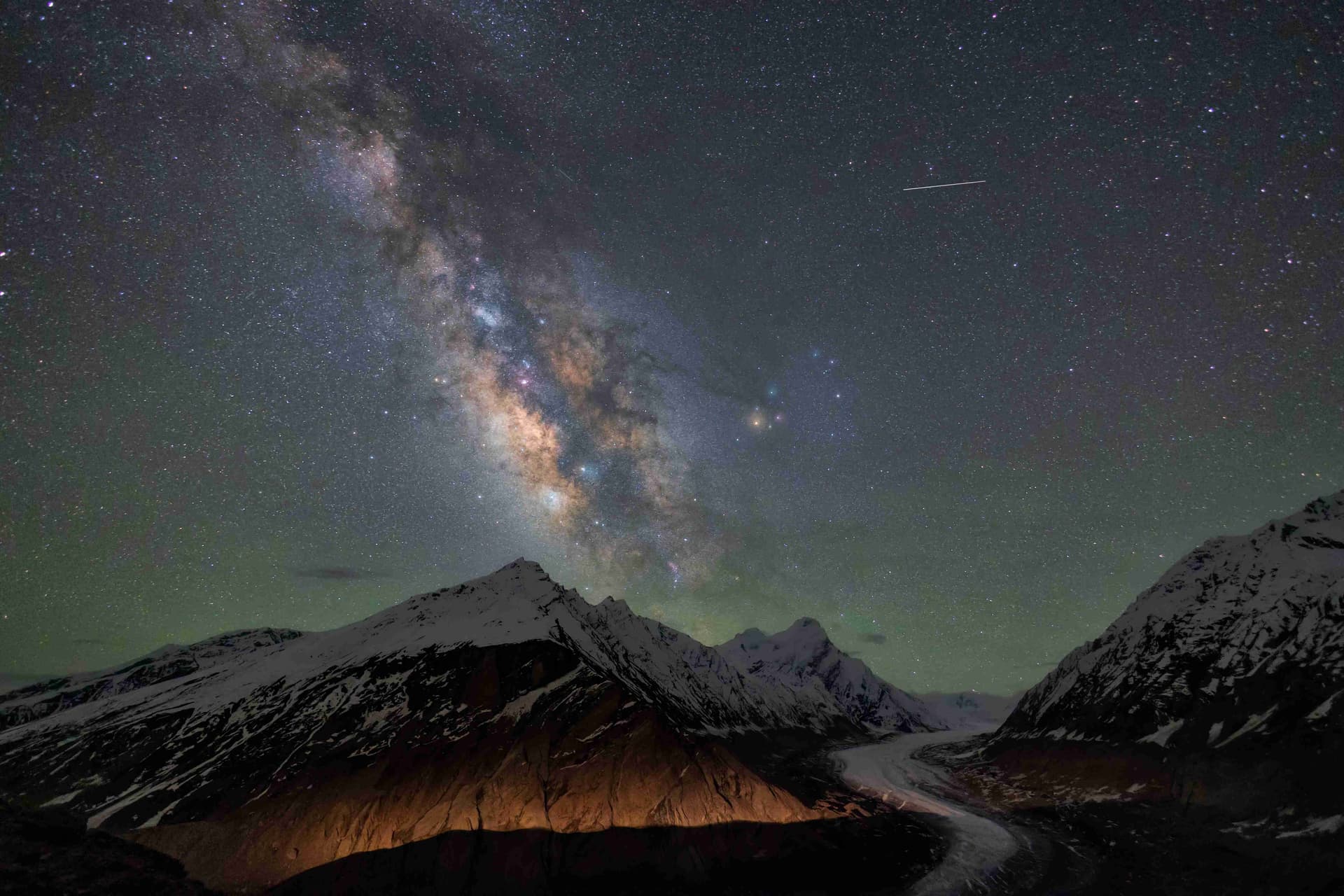
Leh Ladakh Stargazing Guide: Best Places to See the Night Sky
Known for its rugged mountains, high-altitude passes and pristine blue lakes, Ladakh has another side that comes alive only after sunset. Ladakh is away from the bright lights of big cities, and its skies are remarkably clear and dark, with thousands of stars, the Milky Way and several planets visible to the naked eye.
Stargazing can be a particularly memorable addition to the itinerary for travellers planning Ladakh tour packages. And you don't always need professional equipment. Find a dark spot, wait for the right moon phase, let your eyes adjust, and just look up.
Why Is Ladakh So Great for Stargazing?
Ladakh is very good for looking at the night sky because of the high altitude and dry climate, sparse population and relatively low light pollution. It is a stark contrast, especially if you move away from the hustle and bustle of Leh and spend a night in the solitude of remote villages, lakes or the Changthang region.
The most outstanding example is that of Hanle. The Hanle Dark Sky Reserve (HDSR) is spread in a radius of about 22 km around the Indian Astronomical Observatory and was notified in December 2022. "The region has some of the darkest skies in India," says the Indian Institute of Astrophysics.
Ladakh Tourism now promotes Hanle and Pangong for astro-tourism and recommends new-moon nights for better visibility.
Top 10 Places to View Stars in Leh Ladakh
1. Hanle – The Best Place for Stargazing
If the main purpose of the trip is astronomy, then Hanle is a must-visit. Hanle, in Changthang, some 270 km from Leh, is at an altitude of around 4,200 meters above sea level and is home to the Indian Astronomical Observatory.
There is very little artificial light, so the night sky is far darker than most urban travellers are used to. The dry atmosphere, high altitude and low atmospheric water vapour have even made the area suitable for professional astronomical research.
You could do a lot worse than booking an astro-tour with one of Hanle’s trained Astronomy Ambassadors. Local guides trained by the Indian Institute of Astrophysics run night-sky sessions for visitors using telescopes.
Important: The Indian Astronomical Observatory is a scientific research facility. Visitors should not expect to use the research telescopes for public stargazing; official visitor access is in designated daytime hours.
2. Pangong Tso – Stars Above the Himalayan Lake
One of the most photogenic places for stargazing in Ladakh is Pangong Tso. Picture the Milky Way arcing over a big mountain lake and the landscape becoming almost completely quiet.
From an astronomy point of view, the Merak side of Pangong is very interesting. Astronomical observations and rare auroral activities from the region have been recorded by the Indian Astronomical Observatory at Merak.
If you are an adventure- and photography-loving traveller, an overnight stay near Pangong can make a Leh-Ladakh bike trip more exciting. Don’t assume every lakeside campsite will have equally dark skies; local lighting, nearby vehicles and accommodation can make a noticeable difference.
3. Tso Moriri – A Starry Night to Remember
Another good option for travellers looking for a quieter night-sky experience is Tso Moriri in the Changthang region. After dark, the lack of development, remote location and surrounding mountains keep things naturally quiet.
It’s especially desirable for photographers who would like to combine reflections, mountains, and stars in one frame. Accommodation and weather can be hit or miss, so don’t expect a spontaneous late-night stop at Tso Moriri: plan your overnight stay ahead of time.
4. Nubra Valley – Stargazing Away from Leh
While the Nubra Valley is best known for its dunes, monasteries and mountain scenery, its more secluded villages can also provide pleasant views of the night sky. The areas away from the brighter pockets of Diskit and Hunder are preferred.
Nubra is an easy stopover for a simple stargazing session for travellers who sign up for a Leh Ladakh group tour without having to create a whole new itinerary for astronomy.
What is the best time to view stars in Ladakh?
The best night is not just the one with the best weather. Moonlight counts, too. A bright full moon can wash out faint stars and make the Milky Way harder to spot. The time around the new moon is much darker, and so faint objects are easier to see in the sky.
One helpful rule is this:
| Moon Phase | Best For |
|---|---|
| New Moon | Best for Milky Way and faint stars |
| Crescent Moon | Good mix of moon viewing and dark skies |
| Full Moon | Good for lunar photography, bad for faint stars |
Clear, dry nights are usually better than cloudy or hazy nights.
Ladakh Tourism presently suggests the period from April to October as an ideal time for astro-tourism and recommends new-moon nights for maximum visibility.
What Will You See in the Ladakh Nite Sky?
You don’t need an expensive telescope to enjoy Ladakh’s skies. On a truly night, you might be able to see:
- The Milky Way in the sky
- Jupiter and Saturn, when they are visible in season, are bright planets.
- Major constellations and notable stars
- The surface details of the Moon, and
- Active phases of meteor showers
- Deep sky objects and star clusters through a telescope (brighter stuff)
- Sometimes strange phenomena in the atmosphere or in the solar system
Zodiacal light – the extremely faint phenomenon – has been observed from Hanle, as well as rare auroral activity from Hanle and Merak. Of course, these events are special events and should not be taken as a given attraction.
Practical Tips for Stargazing in Ladakh
A little bit of preparation goes a long way. Remember these:
- Allow your eyes time to adapt to the dark for 20-30 minutes.
- Don't keep looking at your phone. The bright screen will impact your night vision.
- Don't use a bright white torch. Carry a red-light torch.
- Check the moon phase and weather before you go!
- Layer up to stay warm – temperatures can drop quickly after dark.
- If you want to capture the Milky Way, use a tripod.
- Never enter restricted areas around observatories by car or foot.
- Avoid bright lights and follow the local dark-sky ordinances.
- Stay in a proper homestay or accommodation rather than camping in an unsafe or environmentally sensitive zone.
Most importantly, remember that Ladakh is a high-altitude destination. You shouldn’t be out on a late-night stargazing session at the expense of acclimatisation, rest or basic travel safety.
How to include stargazing in your Ladakh itinerary
Stargazing is best done as part of your pre-planned route, not as an add-on to an already exhausting day. Hanle can be included in a Changthang itinerary, Pangong works well with an eastern Ladakh itinerary, and Nubra is a more comfortable option for those following the traditional Leh–Khardung La–Nubra circuit.
If you are planning a Leh Ladakh trip from Delhi, consider keeping at least one or two nights outside Leh for a dark sky experience. The adventure seeker can combine the experience with a Leh Ladakh bike trip, while families and first-time travellers may prefer a comfortable vehicle-based itinerary.
Conclusion
The night sky in Ladakh is not just another sightseeing attraction. It’s one of those experiences that’s more impressive when you slow down and spend time with it. Star attraction Hanle features its Dark Sky Reserve, which blends scientific astronomy with community-driven astro-tourism and efforts to preserve the darkness itself.
Leave the brightest lights behind, switch off your phone for a while and give the sky your full attention, whether you’re photographing the Milky Way over Pangong, watching constellations from a Nubra homestay or taking part in a guided telescope session in Hanle. That’s when stargazing in Leh Ladakh stops being just another item on the itinerary and becomes part of the journey.