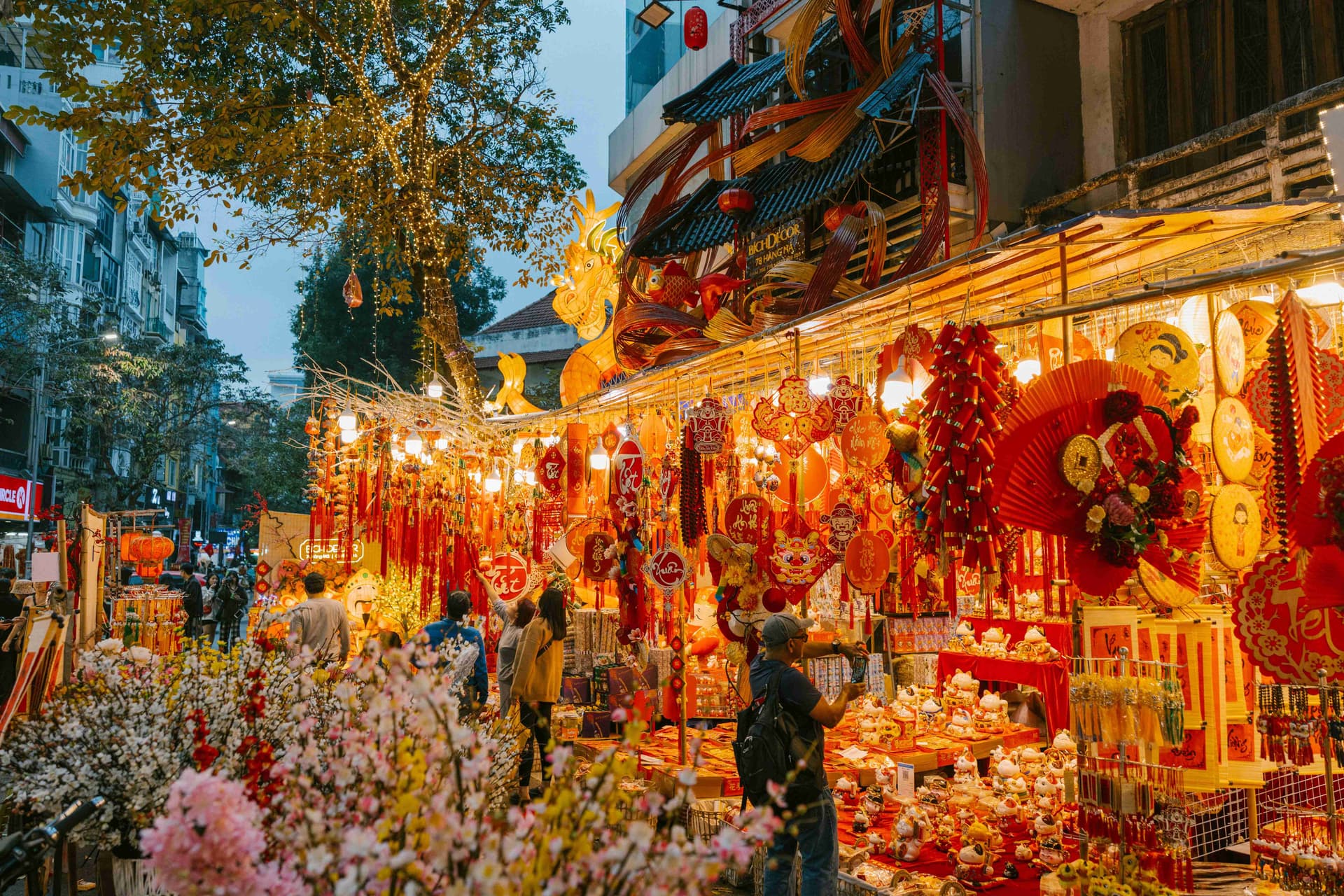
Tet Festival in Vietnam: Dates, Meaning, Traditions & Tourist Information
What Is the Tet Festival in Vietnam?
Tet, short for Tet Nguyen Dan (the Feast of the First Morning), is the Vietnamese Lunar New Year. It marks the arrival of the new year according to the traditional lunar calendar and is the most important holiday in the country. Think of it as Christmas, New Year and a family reunion rolled into one.
Because Tet follows the lunar calendar, its date changes every year, usually falling between late January and mid-February. In 2026, Tet fell on 17 February. Tet 2027 falls on Saturday, 6 February 2027, and begins the Year of the Goat. New Year's Eve is the night of Friday, 5 February.
The celebration is not limited to a single day. The atmosphere starts building a few weeks earlier with shopping, cleaning and decorating, then peaks over the first three days of the new year, and the festive mood lingers for a while after that.
Why Is Tet Festival Celebrated?
Tet is celebrated because it marks a fresh start. It brings together several ideas that matter deeply to Vietnamese families.
A new beginning. Tet welcomes the arrival of spring and the start of a new lunar year. People hope to leave the troubles of the old year behind and begin the new one with good luck, health and prosperity.
Honouring ancestors. Vietnamese culture places great importance on remembering ancestors. During Tet, families clean graves, prepare altars and offer food and incense to invite ancestors to join the celebration.
Family reunion. Tet is the one time of year when almost everyone tries to be home. Workers travel back to their hometowns, and families sit down together for shared meals.
Gratitude and good wishes. It is a time to thank elders, mend relationships and exchange blessings for the year ahead.
Agricultural roots. Historically, the lunar calendar guided farming life, so Tet also marked the end of the harvest cycle and the start of spring planting.
In short, Tet is celebrated to say goodbye to the old, welcome the new and bring family, ancestors and community together.
How Is Tet Celebrated in Vietnam?
Tet traditions vary a little between the north, centre and south of the country, but the heart of the festival is the same everywhere.
Cleaning and decorating the home
Before Tet, families clean their houses thoroughly to sweep away bad luck. Many people also settle debts, get haircuts and buy new clothes so they can start the year fresh. Homes, shops and streets are decorated in red and gold, colours linked to luck and happiness.
Flowers: peach blossom, apricot blossom and kumquat
Flowers are the face of Tet. In northern Vietnam, pink peach blossoms are the classic symbol of spring. In the south, bright yellow apricot blossoms take their place. Kumquat trees loaded with fruit are popular across the country as a sign of fortune. Cities set up flower streets and displays, and Ho Chi Minh City's Nguyen Hue flower street is known for drawing more than a million visitors each year.
Sending off the Kitchen Gods
On the 23rd day of the twelfth lunar month, many families make offerings to the Kitchen Gods, who are believed to travel to heaven to report on the household before the new year. Some families release a live carp as part of this tradition.
Traditional Tet food
Food is central to Tet, and many dishes carry symbolic meaning:
Banh chung (a square sticky rice cake) and banh tet (a cylindrical version), usually filled with mung bean and pork, are the signature dishes of the festival
Gio cha (Vietnamese pork sausage) and pickled onions
Mut (candied fruits and seeds) served with tea
Boiled chicken, sticky rice and spring rolls offered on the family altar and shared at the table
New Year's Eve (Giao Thua)
The moment of Giao Thua, the passing from the old year to the new, is the emotional high point. Families gather for a special meal, make offerings and wait for midnight. Large cities usually hold fireworks displays, and many people visit temples and pagodas to pray for a good year.
First-footing and lucky money
The first visitor to a home in the new year is believed to influence the family's luck, so families often invite someone with a good reputation to be the first guest. Adults give children and elders small red envelopes containing li xi (lucky money), along with good wishes for the year.
Visiting family and friends
The first three days of Tet follow a custom: the first day is for the father's side of the family, the second for the mother's side, and the third for teachers and friends. Visits are filled with tea, sweets, laughter and good wishes.
Cultural performances and games
Expect lion and dragon dances, traditional music, calligraphy displays, folk games and street festivals in many cities and towns.
Tet customs and taboos
A few beliefs shape what people do and avoid in the first days of the year. Many people avoid sweeping the floor, arguing or breaking things, since these are thought to chase away luck. Cheerful words, smiles and generosity are encouraged.
Regional Flavours of Tet
Northern Vietnam (Hanoi and surroundings): Peach blossoms, banh chung and a more traditional, quieter family atmosphere
Central Vietnam (Hue, Hoi An, Da Nang): Royal-era heritage in Hue, along with lantern-lit streets and local specialities
Southern Vietnam (Ho Chi Minh City and the Mekong Delta): Yellow apricot blossoms, banh tet and bigger, livelier street celebrations
Is Tet a Good Time to Visit Vietnam?
It can be, depending on what you want. Tet is a wonderful time to see Vietnamese culture at its warmest, with beautiful decorations, festive streets and a special atmosphere. It is also the busiest travel period for locals, so transport is crowded, prices rise and some businesses close. Visitors who plan ahead, stay flexible and enjoy cultural experiences over busy sightseeing tend to have a great time.
Tet Travel Tips for Tourists
1.Book early. Flights, trains, buses and hotels fill up fast around Tet as locals travel home. Book as soon as your dates are fixed.
2.Expect closures. Many local shops, restaurants and family-run businesses close for several days, especially around the first three days of Tet. Tourist areas, hotels and larger attractions generally stay open, sometimes with shorter hours.
3.Stock up before Tet Eve. Keep snacks, water and essentials handy, and eat at hotels or open restaurants when many places are shut.
4.Plan your days around the festivities. Visit flower streets, pagodas and temples, and enjoy the street decorations instead of cramming in a long list of sights.
5.Carry cash. Some places may be closed or limited, and small cash is useful for tips and local purchases.
6.Dress respectfully at temples, and avoid loud arguments or negative talk, which many locals consider unlucky during Tet.
7.Allow buffer days. Transport delays are more likely at the start and end of the holiday period.
8.Join a guided trip. A planned itinerary with transfers and stays already arranged takes much of the stress out of travelling during peak season.
Tet is more than a holiday. It is the best way to see how Vietnamese families live, remember their ancestors and welcome the future. With early planning and respect for local customs, a trip during Tet can give you memories that go well beyond ordinary sightseeing.
Ready to plan your Vietnam journey? Explore Vietnam tour packages with Go 360 and find an itinerary that fits your dates.