

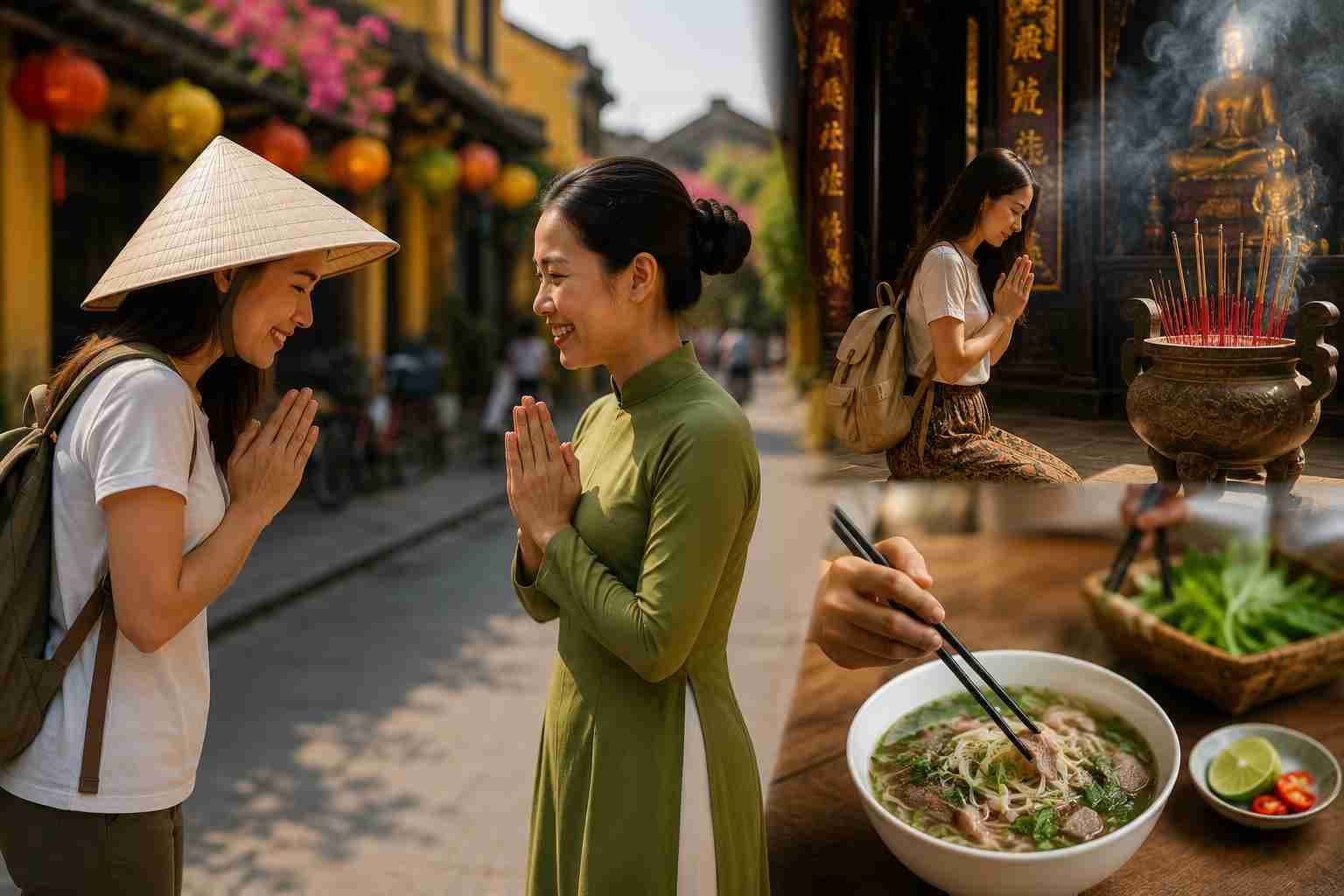
Vietnam Travel Etiquette: Local Customs Every Tourist Should Know
Vietnam is a country where ancient traditions, family values, spirituality and modern city life live side by side. If you're visiting for the first time, a few local customs will go a long way towards making everyday interactions much easier – and often, more meaningful. Little things can make a big difference - from knowing how to greet someone to how to behave respectfully at a temple.
If you are headed off on a holiday with Vietnam tour packages then it is a good idea to brush up on the basics of local etiquette before you arrive. This will allow you to travel more thoughtfully and connect better with the people you meet.
1. Dress Respectably When Visiting Temples and Pagodas
Vietnam's temples and pagodas are places of worship, not just tourist attractions. So modest attire is valued, particularly when visiting religious or culturally significant sites.
Inside sacred spaces, cover your shoulders and knees, and avoid revealing outfits whenever possible. You may be asked to take your shoes off before entering some areas.
Photo rules can vary so remember that. If people are praying or monks are doing a ceremony, step back and let them do their thing instead of stepping into the moment for a photo.
2. Know the Basics of Vietnamese Greetings
A friendly smile is universally appreciated, but in Vietnam, greetings can be more nuanced than simply saying hello.
A polite verbal greeting with a slight bow is very suitable in formal situations. The Vietnamese are very conscious of age and social position, so it is important to use respectful terms when addressing people older than you.
You don't need to be a Vietnamese master before your trip. A handful of basic phrases like xin chào (hello), cảm ơn (thank you), xin lỗi (sorry/excuse me) go a long way towards making interactions warmer.
For travellers who are on Vietnam group tour packages, these small efforts can also go a long way to help make a good impression when dealing with local guides, restaurant staff, drivers and shopkeepers.
3. Learn Vietnamese Dining Etiquette
One of the best ways to experience Vietnamese culture is through food, and meals are usually social occasions rather than a rushed stop between sightseeing activities.
If you are dining with the locals, wait for the host or the eldest person to start before you begin your meal. When there are serving utensils, use them to take food from the shared dish instead of your personal chopsticks, as we often share dishes.
Some table manners that are especially good to remember are:
- Don't put chopsticks upright in a bowl of rice, because it looks like incense at a funeral. Do not play with people or point at them with chopsticks.
- Dishes are shared in the middle of the table so don't be surprised if you see food in the middle of the table.
- When you are offered food, it is generally considered polite to eat at least a little of it.
- At casual street-food stalls, just observe what the locals do and imitate.
4. Visiting Someone's House Requires Caution
If your Vietnam vacation packages feature a homestay or an invitation to a local home, expect a more personal cultural experience.
If the householder takes off their shoes, do the same, and wait to be directed where to sit. Many Vietnamese families have special respect for elders, so let the older members of the family take their place first when eating or gathering.
When visiting someone at home it is a nice gesture to bring a small gift (fruit, sweets, a souvenir appropriate to the locality). It's not about the money; the gesture is more important.
5. Respect Family and Spiritual Traditions
Family is central to Vietnamese society, and ancestral traditions are important in many households. Homes and businesses may have family altars, offerings, or pictures of ancestors.
Please keep these places sacred. Do not contact offerings, move objects, or take close-up photographs without permission.
No joke should be made about religious practices or sacred symbols. You don't have to be a believer in a certain faith to honour one.
6. Ask Before Taking Photos of People
From colourful markets to traditional villages, Vietnam provides many opportunities for memorable photographs. But not everybody wants to be photographed.
When taking a close-up portrait, especially of elderly people, vendors, monks or children, it's the polite thing to do to ask first. A simple gesture and a smile can tell you what you mean even if there is a language barrier.
This is especially true in rural communities where visitors can be more noticeable than they would be in large cities.
7. Negotiate Courteously, Not Aggressively
In some Vietnamese markets, bargaining can be part of the shopping experience, but it should be friendly.
If a vendor quotes a high price, negotiate with a smile, and know when to walk away. There is no use of arguing about a small difference in price.
Bargaining is usually not required at fixed-prices stores, supermarkets, established boutiques and many restaurants. Knowing the difference will make your Vietnam tours more fun and prevent embarrassing moments.
8. Respect Personal Space and Public Decorum
Vietnamese cities can be lively and bustling but public behaviour is still relatively respectful. Unnecessary disruptive behaviour, loud confrontations or aggressive arguments can draw unwanted attention.
When travelling by bus, train or domestic flight it's good to be organised with your belongings and considerate of fellow passengers. Keep an eye on your valuables in busy markets and tourist areas, but don't be suspicious of everyone around you.
Public displays of affection are best kept modest, especially in traditional or religious settings.
9. Tipping, When and How?
Tipping in Vietnam is not common, but it is growing in the tourism and hospitality industry, especially when someone has done an excellent job.
You might want to look at tipping guides, drivers, hotel staff or restaurant staff as appropriate. But don't feel like you must tip just because you're a tourist.
It is a good idea to check with the tour operator if gratuities are included in the package price for travellers booking Vietnam tour packages for couple, families or private tours.
10. Things Tourists Should Not Do
Learning local customs can be as useful as knowing what not to do. Remember these easy points:
- Don't touch someone's head, especially a child, unless you have a good reason.
- Don't point your feet straight at people or sacred things.
- Stay away from political or sensitive topics unless you know the person well and the subject arises naturally.
- Do not enter any restricted areas in temples or cultural sites.
- Do not photograph military or security installations.
- Not everyone in the local area speaks English so a little patience can go a long way.
- Negotiate prices or misunderstandings respectfully.
The Importance of Vietnam Travel Etiquette
Good travel manners don't mean memorising a long list of rules. It is about being observant, and respectful, and willing to change. Vietnamese people are generally hospitable to visitors and a genuine attempt to understand local customs is often appreciated.
Whether you're exploring the historic streets of Hanoi, enjoying street food in Ho Chi Minh City, relaxing along the coast or discovering rural communities, respectful behaviour can be the difference between ordinary interactions and memorable experiences.
Before you book Vietnam packages, take some time to understand the cultural norms of the destinations on your itinerary. Travelling becomes much more rewarding when you experience a country not as a visitor but with thought for the people and traditions that make it unique.